
By Ann Higgins
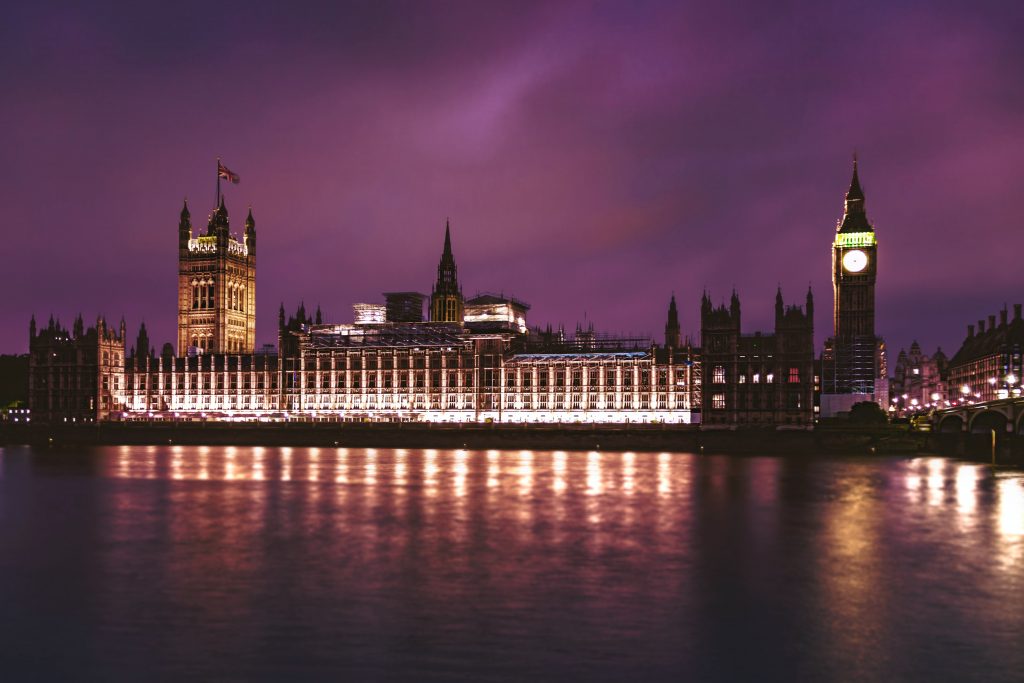
Photo by Deniz Fuchidzhiev on Unsplash
Is it really a month or so since we were last talking about the Rwanda Bill? It’s beginning to feel increasingly like Groundhog Day with the new session of Parliament opening just as the old one closed with the Rwanda Bill ping-ponging between the two Houses. The Commons took its latest shot yesterday by voting out all the Lords’ amendments passed at the end of the last session (for which see our last edition of this newsletter) but the Lords swiftly replied by passing four amendments to the Bill before sending to back again, all in little over 24 hours. Now we await the inevitable cancellation of the Lords’ amendments by the Tory-dominated Commons followed by the Lords’ response. Who will blink first?
There have also been some recent interesting developments on the other side of the Channel, both in the EU and the ECtHR. While the UK government is struggling to offload its commitment to refugees to far-flung Rwanda, after years of planning the EU has developed a comprehensive Migration and Asylum Pact which on 10 April was passed by a majority of the Parliament. As explained here, it has attracted opposition from both left and right and it remains to be seen how it will work out in practice when it starts to be implemented in 2026. More details here.
More or less simultaneously, the ECtHR was making waves in a case brought by a group of older Swiss women against Switzerland for its alleged failure to act quickly enough to counter climate change. The basis of their claim was that older people are more likely to die than the general population in particularly high temperatures, so they needed the Swiss government to act more quickly. This was framed as a breach of their rights to family life under Article 8 and while the court did not dictate how Switzerland was supposed to achieve their targets there will undoubtedly be cases brought in the domestic courts of the other 45 signatory states relying on this decision.
Meanwhile, the Tories are still tearing themselves apart over what to do about our membership of the ECHR, with a reported 10 cabinet members wanting to retain it while others are against. A recent Telegraph poll has revealed that nearly 50% of 2019 Tory voters want to leave with 35% wanting to remain but whether or not Rishi Sunak could carry the cabinet with him remains to be seen. While it is technically possible for us to leave before the next general election (which has to take place at the latest in late January 2025), it’s more likely that it would be part of the Tory manifesto and try to attract some of those now disaffected Tory voters from 2019.
Lastly, those of you with long memories may recall that in 2022 the government agreed after pressure from many quarters including the police to repeal the 1824 Vagrancy Act which made rough sleeping an offence, though it remained on the statute books as no implementation date was enacted. So imagine the surprise when the Criminal Justice Bill was published last November containing new offences which are as bad as the original law if not even more draconian. To quote the evidence given by the charity Crisis to the Parliamentary Criminal Justice Committee last December:
12. The concept of “nuisance rough sleeping” has not been raised in all of our years in campaigning against the Vagrancy Act. Only 26% of respondents to Government’s internal review of the Vagrancy Act thought legislative changes are needed for rough sleeping and only 25% of respondents to the public consultation on replacement legislation were in favour of introducing new offences in relation to rough sleeping. [1] This is not sufficient support for this legislation.
13. The new definition of “nuisance rough sleeping” that this Bill introduces is extremely broad and risks people being criminalised simply for how they look, or their behaviour appears.
14. There is no requirement in the Bill as currently drafted for people to have either slept rough or engaged in nuisance behaviour for them to fall foul of the legislation. Clause 61 (2) states that the “nuisance rough sleeping” condition can be met if a person is “sleeping rough, or is intending to sleep rough in a place (or gives the appearance that [the person] is sleeping rough, or intending to sleep rough, in a place)”. The enforcement of a nuisance rough sleeping notice (see page 4 of this submission) can be met if a nuisance rough sleeping condition is “likely to be met”.
15. It is impossible to know how people could appear to sleep rough except from their appearance. People who sleep rough are already often subject to stigmatisation and the legislation risks exacerbating this.
16. This is particularly concerning when statistics show that the most common support need amongst people sleeping rough is mental health, and often people who are in need of the most help and are most likely to sleep rough for prolonged periods of time, have multiple support needs such as mental and physical health and addiction. Robust data on people sleeping rough in London between July to September 2023 shows 49% of people sleeping rough had mental health support needs combined with other support needs. [2] Under this legislation, appearance and behaviour related to genuinely needing support will instead risk a response of enforcement.
17. The broad definition of “nuisance” also captures activity that is extremely subjective and in some cases the language used is dehumanising. Clause 61 (4) defines “nuisance” in relation to rough sleeping and includes ‘causes or does something capable of causing damage, disruption, harassment, or distress”. Clause 61 (5) further defines this as including “excessive smells”, and displaying signs or writing that can be considered “insulting”. We strongly disagree with these being suitable measures that can be used to define “nuisance” behaviour.
18. We are further concerned that sleeping in doorways and other forms of shelter are deemed “nuisance” behaviour under this legislation if they are considered ‘obstructing’ entryways. People sleeping rough, and particularly women, often sleep rough in less visible places because they are 17 times more likely to experience violence and abuse. [3] We strongly disagree that the response to seeking some small amount of shelter when faced with the dangers of sleeping rough should be considered “nuisance” behaviour and are concerned this will risk lives as the threat of moving people on, imprisonment and steep fines can lead to people forced into exploitation and even less engagement with services.
These measures were felt to be the brainchildren of Suella Braverman, but despite her being replaced by James Cleverly, it is notable is that the government seems intent on pressing on with them despite the change at the top of the Home Office. Meanwhile the much-hated Vagrancy Act remains in force.
STOP PRESS
Rwanda Bill ping-pong will continue into next week after the Lords insisted on retaining two amendments: one requiring parliament to agree that Rwanda is a “safe” country before asylum seekers can be sent there and a second forbidding Afghanis who assisted British troops from being sent there. The Bill returns to the House of Commons on Monday 22 April.


