
By Chris Davey
In 1951, the year I was born, the UK electricity grid was powered pretty much totally by burning coal. Half a century on, in 2001, the picture was very different: coal had fallen to just one third of the total, with gas coming in at about 36%, oil at 3% and nuclear had arrived at 23%. Hydro and renewables hardly registered. No solar. Imports were 2.6% (Imported energy from Europe began to become significant in the late 1980s.)
And here we are today; coal gone, nuclear down somewhat, renewables way up at about 47%, and the introduction of biomass. So we have made progress in the reduction of fossil fuels, and in the considerable development of renewables. (I explored biomass in previous articles and regard it as non-renewable).
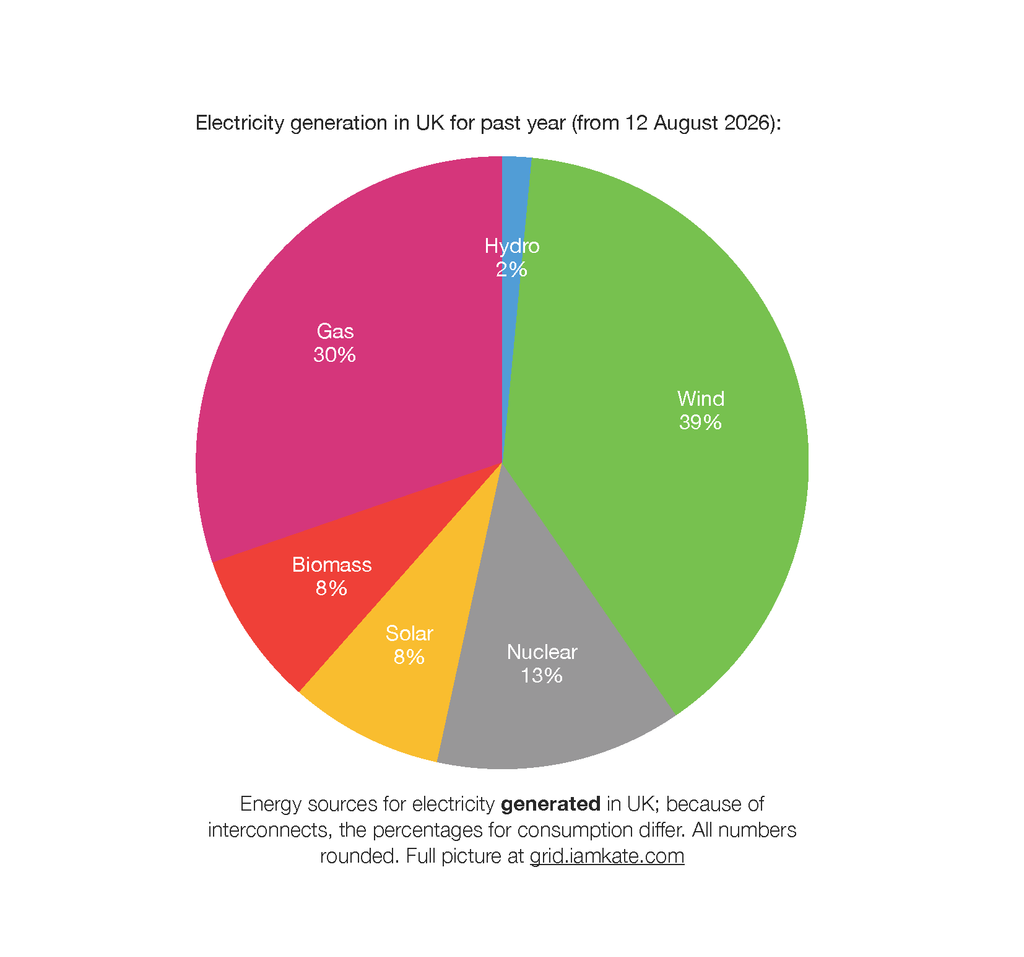
Graphic: Chris Davey. Data in this section from Our World In Data and grid.iamkate.com
When you consider all the sectors where energy is used, aside from electricity generation, such as surface transport, aviation and production of steel and concrete, and look at some of the barriers, it becomes clear that decarbonising the electricity sector has been relatively easy – the “low-hanging fruit” of the energy transition (with apologies for the cliché!).
Back in 2023, I bought a book titled “No Miracles Needed: How Today’s Technology Can Save Our Climate and Clean Our Air”, by Professor Mark Z Jacobson of Stanford University. His thesis is that we have much of the existing tech to do away with fossil fuels. The book is rich in information on the relevant technologies, and in 2026 there is an updated version called “Still…(and then the rest of the title)”, so anyone interested in it now should probably seek out the later edition.
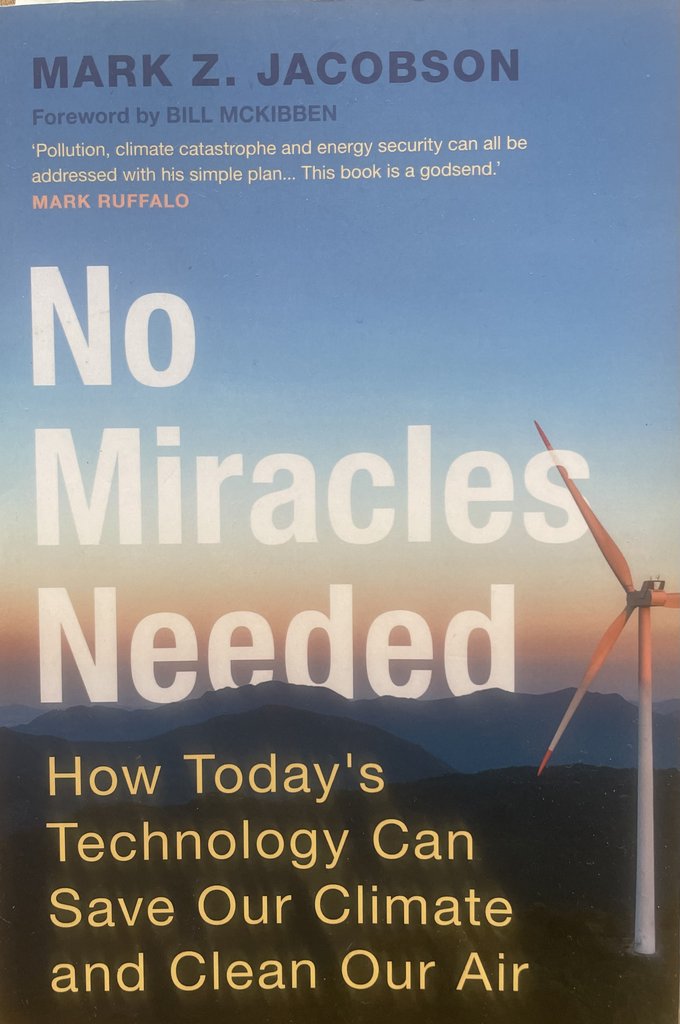
Book cover: Jacobson, M.Z. (2023) _No Miracles Needed: How Today’s Technology Can Save Our Climate and Clean Our Air. Cambridge University Press, with permission.
So the takeaway is that, by and large, the tech is not a problem to decarbonising. We just need the will to do it. Steadily increasing wind and solar, with bits of hydro where possible, together with energy storage, should be able to serve our grid. Of course, the grid itself needs to be developed further, but again this should be doable. Note that I say “energy” storage, which must of course include batteries (which are getting cheaper and better all the time, and less reliant on controversial minerals), but could also include heat storage, pumped hydro and other tech. Much more on this in the book.
Back to today, and with horrendous scenes of fires in the news, I just can’t ignore this – five heatwaves in the UK so far this summer, with wildfires in UK and Europe. As the deniers point out, we’ve always had wildfires and some even say it’s “nature’s way” of reviving areas of ground. But along with other extreme weather events, they are getting more frequent and more severe, putting a lot more carbon into the air and rendering large areas of ground inactive in the immediate future; in other words, they push climate breakdown even further because of the release of carbon dioxide and the reduced capacity for that ground to sequester carbon. That’s alongside the threat to wildlife and people. But let’s just examine the “more frequent” issue.
In a recent video, YouTuber Simon Clark has pointed out the stats on wildfire emissions. Despite all the fires reported recently the resulting emissions are the lowest for any year since 2003. So how can that be? Simon examines this in some depth in his video, but briefly, it is because we are getting more fires here in Europe, which is warming faster than other areas of the planet. So we are getting wide reporting on wildfires close to home, an example of reporting on what affects “us” rather than “them”. In parallel, Asia has been experiencing devastating floods, which are not so keenly reported.
Lastly, just a brief mention that we are getting more fires in recycling centres, because recycled materials are drying out in hot weather, and there is the ever-present problem of batteries being chucked into rubbish/recycling, which are then crushed in processing, and voilà, fire. It’s a recycling issue, but of course joined up to environment and climate, so maybe worth a closer look at some stage.
***********************************************************
Sources and recommended web resources:
https://ourworldindata.org/grapher/electricity-mix-uk
Simon Clark:
https://www.theguardian.com/world/2026/aug/10/typhoon-dolphin-china-shanghai-flooding-evacuations
“Talking Rubbish” podcast – a really excellent “binful” of information on all things rubbish and recycling.


