
By Ann Higgins
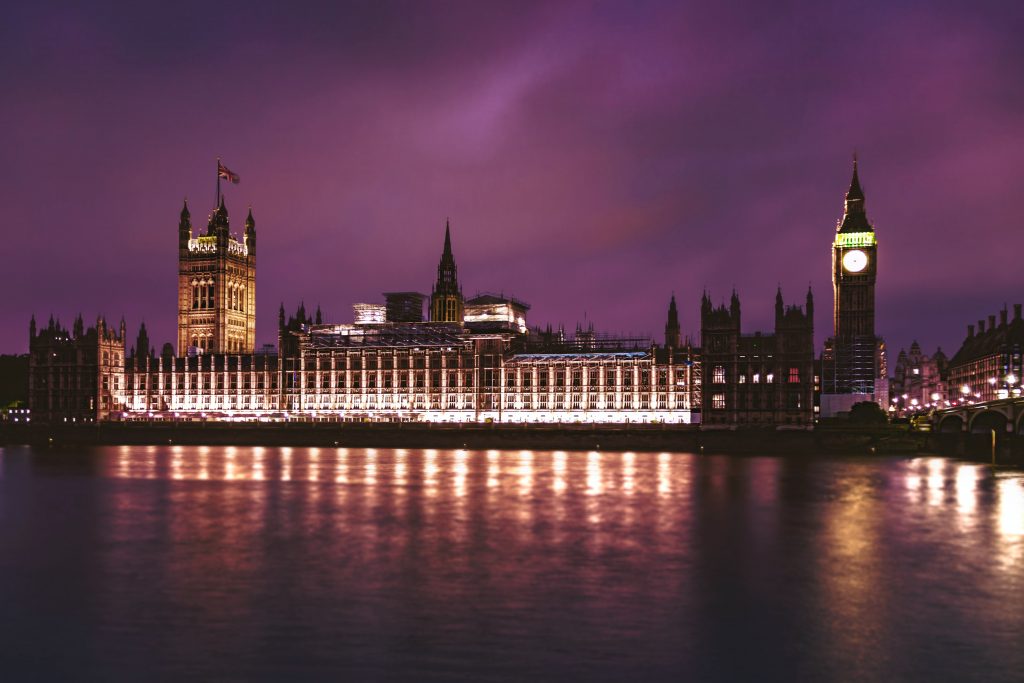
Photo by Deniz Fuchidzhiev on Unsplash
Despite the fact that, on the face of it, it has little to do with the EU or our membership of it, I make no apologies for returning to the subject of the Rwanda Bill – officially the Safety of Rwanda (Asylum and Immigration) Bill – given the prominence it continues to have in our news bulletins. Who could have guessed when Priti Patel first came up with her wretched Rwanda scheme that it would end up plunging us potentially into yet another Tory leadership contest, a constitutional crisis or even a general election?
So, hands up anyone who watched or listened to the debate – not just me I suspect. Of course, it was only the second reading of the Bill so there are quite a few more procedural hurdles for it to overcome before it can become law – the committee stage and third reading in the House of Commons when amendments can and in this case most probably will be tabled and voted on, and then a similar procedure in the House of Lords. One procedural quirk with this Bill is that, because it was not flagged up in the last Tory manifesto, the Lords is at liberty to vote against it as many times as it likes over the next 12 months. So, in theory at least, it could ping-pong back and forth between the two chambers right up to the next election, which must be held by the middle of January 2025, i.e. 25 working days after the last day on which this Parliament may sit – which is 11 December 2024, five years after the last general election.
For those who were watching and listening, I wonder if, like me, you detected a clear disconnect between the speeches of the vast majority of the Tories and reality. Who would have guessed from listening to them that a maximum of 100 asylum seekers (or is it 200 – no-one really seemed to know) could be sent there during the first year or so? Even if those setting out on small boats are aware of the risk that they might be sent to Rwanda, of which no evidence was offered, given the numbers involved is that really going to be a deterrent? Over 80,000 asylum seekers arrived here last year, of whom 45,000 arrived by small boat, compared with 27,000 by the end of October this year, the reduction being largely related to the arrangement with Albania for the swift return of their citizens immediately after arrival here. However, the overall number of asylum seekers does not seem to have diminished, over 80,000 applications having been received in the 12 months ending 30 June 2023. Pretty good odds one might think, especially for people who are desperate enough to cross the Channel in a small boat in the first place.
But while “stop the boats” remains the slogan, it seems that this fight is now much more about Parliamentary sovereignty and the ability of the courts to rein in the government when it oversteps the mark, with the ERG and its friends pressing for absolute parliamentary control and “one nation Tories” looking to at least retain a vestige of the separation of powers. The Supreme Court having found on the basis of factual evidence (including from the Home Office itself) that Rwanda was not a safe place for asylum seekers, the government’s declaration that “Rwanda is safe” is as one former Tory minister was quoted as saying, like trying to legislate that all dogs are cats. Despite the very sad death of an asylum seeker on the Bibby Stockholm, reality has been cast aside and the welfare of vulnerable people is seemingly irrelevant. Are we really going back to the magical thinking of Brexit? (Remember David Davis’s “no downside, only a considerable upside”?).
And wither international law in all this? Again, the right of the Tory party seek to supplant it entirely, some of them seeming to think that it won’t matter if we are in breach of our international obligations as it will provide an excuse to leave the ECHR and join that select group of European countries that are not part of the Council of Europe, i.e. Russia and Belarus. Those who are in support of our exit from the ECHR should perhaps ask themselves why they wish to do this? Is it “only” to be able to ignore the human rights of asylum seekers? Or will other groups be next in their firing line?
For those who would welcome a further and much deeper examination of this topic I can recommend this article by Prof Tom Hickman KC for the Institute for Government.
More bad news on the election front, where a new report reveals that the government cannot say whether or not voter ID made any difference to the supposed problem of personation in elections. This is perhaps not that surprising given that the number of cases per year hovers around one or two compared with the estimate that in the local elections earlier this year some 14,000 voters were disenfranchised. How many more will be affected at the next general election, when turnout is likely to be a great deal higher?
And not content with making it harder for thousands of people to vote for no discernible reason, they now intend to double the amount that candidates may spend in the next general election without any obvious justification.
Finally though, I can end with a little bit of good news: at long last the government has set out how voters who have been living outside the UK for 15 years or more may exercise their lifelong right to vote in UK general elections as granted by the Elections Act 2022. The procedure (or rather procedures, as they vary depending on how long you have been out of the UK and whether you were previously registered or not) are helpfully set out in this article, which is primarily aimed at UK citizens resident in France, but the regulations apply to all, no matter when in the world they are. Let’s hope that all who want to be can be registered before the next GE is called – it could be sooner than we think.


