
By Ann Higgins
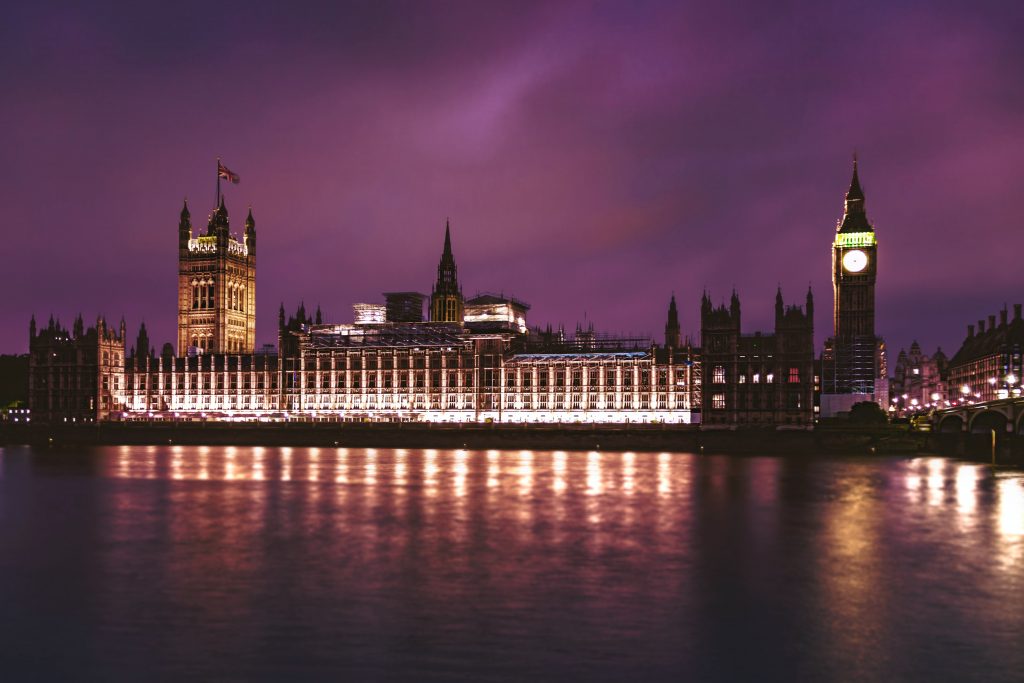
Photo by Deniz Fuchidzhiev on Unsplash
So, Nigel Farage did not manage to inveigle his way into being appointed His Britannic Majesty’s Ambassador to the United States of America after all, though it would certainly have fitted in well with his duties as MP to Mar-a-Lago. Instead, that honour goes to Lord Peter Mandelson who will have the unenviable task of putting the Labour’s government’s views on Ukraine and tariffs (to name but two potentially contentious subjects) to President Elect Trump. Or should that be President Elect Musk? Hard to tell at the moment. (And no, fortunately Musk would not be eligible to stand as a candidate for the US presidency, as he was not born in the US.)
Meanwhile, back in the UK Sir Keir Starmer’s government may be having some teething problems but they are as nothing compared with those being experienced by the Tories whose new leader seems unable to ask her questions at PMQs without scoring a massive own goal; whether it was claiming that there was no mention of defence in the budget when there were at least half a dozen, or forgetting that it was the Tories who imposed electric vehicle targets, or the Tory record on immigration, she never seems to learn. However, my favourite PMQs moment of the year came care of Nigel, when he asked the PM to congratulate Donald Trump on his “landside” election victory (actually the smallest margin in many years) and, for his pains, was himself congratulated for his rare appearance in the Commons by Starmer, who said that Farage had been in the US for so long he had expected to see him in the immigration statistics.
Away from the cut and thrust of the House of Commons, a victory for open government was scored this week by journalist and writer Martin Rosenbaum against the Information Commissioner and the House of Lords Appointments Commission, both of whom had refused his Freedom of Information requests to see the basis upon which Charlotte Owen and Ross Kempsell were recommended by Boris Jonson for peerages in his resignation honours’ list. The elevation to the Lords of Ms Owen, in particular, caused a good deal of speculation due not least to her age, 29, and seeming lack of any relevant qualifications. It was the public interest factor in knowing why those who make laws in the UK have been given the opportunity to do so which weighed very heavily with the Tribunal, which therefore granted an order that the citations supporting their candidature should be released along with some of the names of those who wrote them. Absent any appeal, the material must be released by 22 January.
Finally, readers may remember that there was a discussion in last month’s newsletter about the status of our uncodified constitution. Yesterday’s The Guardian editorial drew to my attention the mapping exercise which has just been carried out by the Commons Library to draw together the many disparate documents which it comprises:
“In a meaty 278 pages, the Commons library report brings together much of what has been written down over the years about Britain’s constitutional arrangements as set out in statutes, judicial decisions and institutional practice. The scope covered is enormous. It stretches from the monarchy and the royal prerogative, through treaties, conventions, primary and secondary legislation, parliament, devolution, taxation, national and local government, the church, judges, the meaning of citizenship and the governance of overseas territories stretching from the Isle of Man to the British Antarctic Territory.”
I know that I shall enjoy exploring it over Christmas and New Year and I hope you do too.


