
By Ann Higgins
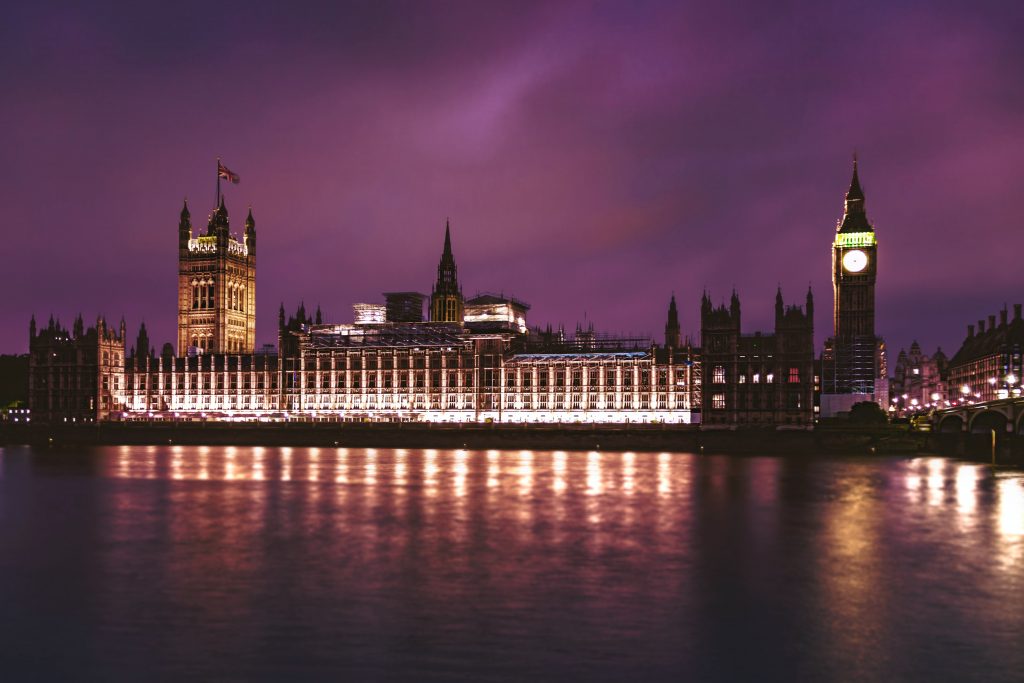
Photo by Deniz Fuchidzhiev on Unsplash
Just as last month I made no apologies for expending quite a few column inches on the Rwanda Bill, despite its less than obvious connection with Brexit or the EU, I make none for starting this month’s foray into the mysteries of Westminster with the Post Office scandal though at first blush it is hard to find anything new to say. Since the airing of the ITV drama about it, is there anyone over the age of 10 who hasn’t heard something about the appalling treatment of the PO sub-postmasters and mistresses over the last three decades? Yet, as we learnt recently, as far back as 1995-6 when the Horizon system originally developed by ICL was being tested in the North of England there were problems leading to prosecutions of at least two sub-postmasters. Nonetheless along with the Post Office they pressed on and by the time ICL was taken over by Fujitsu, the system was being viewed as too big to fail, as evidence from contemporary minutes of meetings disclosed to the public inquiry reveals.
What followed was over a decade of wholly unjust prosecutions based on what we now know were fictional losses created by flaws in the Horizon system and not by dishonesty by sub-postmasters and mistresses. Astonishingly, though this was known to the Post Office employees who conducted the vast majority of prosecutions on behalf of the Post Office, it was never revealed either to the defendants, their lawyers or the various courts around the country where these cases were being heard. Indeed, many defendants were led to believe that they were the only people experiencing problems with the system whereas the truth – borne out by over 1,000 prosecutions not to mention the many cases where sub-postmasters “repaid” money they didn’t owe so as to avoid prosecution – was that they were extremely widespread. Yet, following a number of highly publicised appeals in which the prosecution had been shown to have withheld information vital to the defence, the Criminal Procedure and Investigations Act 1996 was passed in order to ensure that material that might assist the defence would be disclosed. One issue thrown up by the case is how the in-house Post Office prosecutors seem either to have been ignorant of these requirements or to have believed that they did not apply to them. A cynic might think that the fact that they were paid bonuses linked to the number of successful prosecutions they attained had something to do with it but, in fairness, it should be remembered that the so-called investigators had only three weeks’ training and were not lawyers. Nonetheless, to allow such people to carry out prosecutions on behalf of an employer who paid them a bonus based on results casts a great deal of doubt on whether such bodies should be allowed to prosecute on their own behalf at all.
How the PO being allowed to carry out its own prosecutions and other gross flaws in our legal system contributed to the problems faced by its victims is explained here by David Allen Green – a very worthwhile read for anyone interested in how our legal system works – or fails to.
As for the Post Office, it’s still up to its old tricks of non-disclosure, because of which the public inquiry had to be adjourned twice last year. Somewhat ironically, however, this led to one of the main players for the PO having to give evidence not last year when his appearance might have slipped under the radar but last week just after the last episode of the ITV drama was aired, giving his role in the whole sorry saga far more publicity than it would otherwise have garnered. And their old habit of handing out bonuses played its part too, with top executives being given bonuses based in part upon their “co-operation” with the public enquiry, despite that being a statutory duty. Upon that becoming publicly known, they were in large part returned with a strong admonition from the inquiry chair who had been falsely reported as being in agreement with the bonuses being handed out.
Whether a blanket quashing of the convictions of all those convicted should be permitted or they should continue to be dealt with on a case-by-case basis is a matter of debate, but it should be noted that of the nearly 1,000 convictions less than 100 have so far been overturned, with several of those convicted having died before they could receive justice and compensation. Many are believed to be too traumatised or disgusted with the legal system to want to go through the appeal process, which could mean that they are never vindicated. An Act to overturn all the convictions is probably the only way in which all those affected will receive some sort of justice.
Onto an issue which has received far less attention, but which has profound implications for nearly all of our readers sooner or later – the Data Protection and Digital Information Bill, which recently received its third reading in the House of Commons and is now working its way through the Lords. Hidden deep in a recently added and little heralded schedule of the Bill is a clause which would permit the DWP to examine the bank account of anyone in receipt of a state benefit, which is defined as including the state pension. Using the rationale that it would be a fraud-combatting measure, it would give authority to look into the bank accounts of over 12 million pensioners in the UK. Leaving aside the fact that the DWP already has the power to inspect the bank accounts of those suspected of benefit fraud, how would this assist them? The state pension is not a means-tested benefit, so whatever other income or assets a claimant has are irrelevant.
Sadly despite the valiant efforts of Sir Chris Bryant who opened the debate for the opposition, Layla Moran on behalf of the Lib Dems, Sir Stephen Timms who originally drew attention to this hastily included measure, and David Davis, Tory MP who many will remember for his time as Brexit secretary, the Bill which was introduced as a “Brexit benefit” received sufficient Tory votes to get its third reading and has now gone to the Lords. Among many very impressive contributions to the debate which can be read here was this one by SNP MP Patrick Grady, which I thought summed up the problem very well:
“It is difficult to know where to start. The Minister described this as a Brexit opportunities Bill. Of course, Brexit was supposed to be about this place taking back control. It was to be the triumph of parliamentary sovereignty over faceless Brussels bureaucrats, the end of red tape and regulations, and the beginning of a glorious new era of freedom unencumbered by all those complicated European Union rules and requirements that did silly things like keeping people safe and protecting their human rights.
“Yet here we are with 200 pages of new rules and regulations and a further 160 pages of amendments. This time last week, the amendment paper was 10 pages long; today it is 15 times that and there is barely any time for any kind of proper scrutiny. Is this what Brexit was for: to hand the Government yet more sweeping powers to regulate and legislate without any meaningful oversight in this place? To create additional burdens on businesses and public services, just for the sake of being different from the European Union? The answer to those questions is probably yes.
“I will speak briefly to the SNP amendments, but I will also consider some of the most concerning Government propositions being shoehorned in at the last minute in the hope that no one will notice. How else are we supposed to treat Government new schedule 1? The Minister is trying to present it as benign, or even helpful, as if it had been the Government’s intention all along to grant the DWP powers to go snooping around in people’s bank accounts, but if it has been so long in coming, as he said, why is it being added to the Bill only now? Why was it not in the original draft, or even brought to Committee, where there could at least have been detailed scrutiny or the opportunity to table further amendments?
Of course, there should be action to tackle benefit fraud—we all agree on that—but the DWP already has powers, under section 109B of the Social Security Administration Act 1992, to issue a notice to banks to share bank account information, provided that they have reasonable grounds to believe that an identified, particular person has committed, or intends to commit, a benefit offence. In other words, where there is suspicion of fraud, the DWP can undertake checks on a claimant’s account. Incidentally, there should also be action to tackle tax evasion and tax fraud. The Government evidently do not require from the Bill any new powers in that area, so we can only assume that they are satisfied that they have all the powers they need and that everything possible is being done to ensure that everybody pays the tax that they owe.
“The powers in new schedule 1 go much further than the powers that the DWP already has. By their own admission, the Government will allow the DWP to carry out—proactively, regularly, at scale and on a speculative basis—checks on the bank accounts and finances of claimants. The new schedule provides little in the way of safeguards or reassurances for people who may be subject to such checks. The Secretary of State said that ‘only a minimum amount of data will be accessed and only in instances which show a potential risk of fraud and error’.
“In that case, why is the power needed at all, given that the Government already have the power to investigate where there is suspicion of fraud? And how can only ‘a minimum amount’ of data be accessed when the Government say in the same breath that they want to be able to carry out those checks proactively and at scale?”
Even in the face of such opposition, the only response from the minister Sir John Whittingham was that there was no intention to focus upon the recipients of state pensions, which I suspect readers will find as unreassuring as I do. We can only hope that the House of Lords, which perhaps has a larger percentage of those in receipt of state pension than the Commons, will take steps to remove this gross and wholly unnecessary intrusion into the privacy of over 12 million UK citizens.
Finally, back to the government’s Safety of Rwanda (Asylum and Immigration) Bill which is the subject of voting in the HoC as I write. Thanks to the BBC, I’m able to include in this article the news, which I suspect will not be unwelcome to some reading this, that Lee Anderson and Brendan Clarke-Smith have both resigned as Deputy Chairs of the Tory party after signaling their intention to vote for the amendment tabled by Bill Cash for the Tory ultras, though their resignation letter is reported to express total support for Rishi Sunak as PM. Perhaps “total support” means something different in Tory circles from its ordinary English meaning just as their definition of “safe” has a meaning unknown to the Supreme Court.
While I have been writing, the votes which have taken place have so far been carried by the government, though not without significant opposition from within its own ranks. For example, 60 Tory MPs voted for Bill Cash’s amendment which would have given the government authority to overrule international law and the ECHR; had the opposition voted with the rebels the government would have been defeated. Similarly, the amendment to prevent asylum seekers challenging decisions to remove them from the UK in court, proposed by former immigration minister Robert Jenrick, was supported by 58 Tory rebels who would have defeated the government had the opposition voted with them. Rishi Sunak’s position certainly doesn’t get any easier. At the end of this Committee stage tomorrow, the Bill will return to the Commons for third reading shortly and then be sent off to the House of Lords, where there may yet be more Tory rebellions but this time hopefully in favour of maintaining the rule of law and human rights.
STOP PRESS
Despite some trenchant and at times passionate opposition (step forward Jess Philips), to no-one’s great surprise the Rwanda Bill passed its third reading in the Commons on Wednesday night and now goes off to the House of Lords. Whilst the PM wants to pressure the Lords into failing in its duty to scrutinise draft legislation on spurious grounds that it’s what the country wants, he’s unlikely to succeed. Here Joshua Rozenberg explains some of the legal details.
Regarding his concluding two paragraphs, those with access to BBC iPlayer might enjoy the edition of Newsnight on Tuesday 16th January, particularly the interview with the newly minted Minister for Legal Migration and Delivery, Tom Pursglove, trying to explain how the Bill can be compatible with international law (as stated by the Home Secretary during the third reading debate), but simultaneously incompatible with the ECHR as certified on the front of the Bill by the very same Home Secretary.


