
By Chris Davey
- Now in the 21st century, many people in the world still have insufficient food
- Land should be used to grow enough food for all, before we even think about biofuels
- Biomass draws down carbon as it grows, then releases it when burnt, just like fossil fuels do
- …that combustion effectively “cancels out” the benefit of the drawdown.
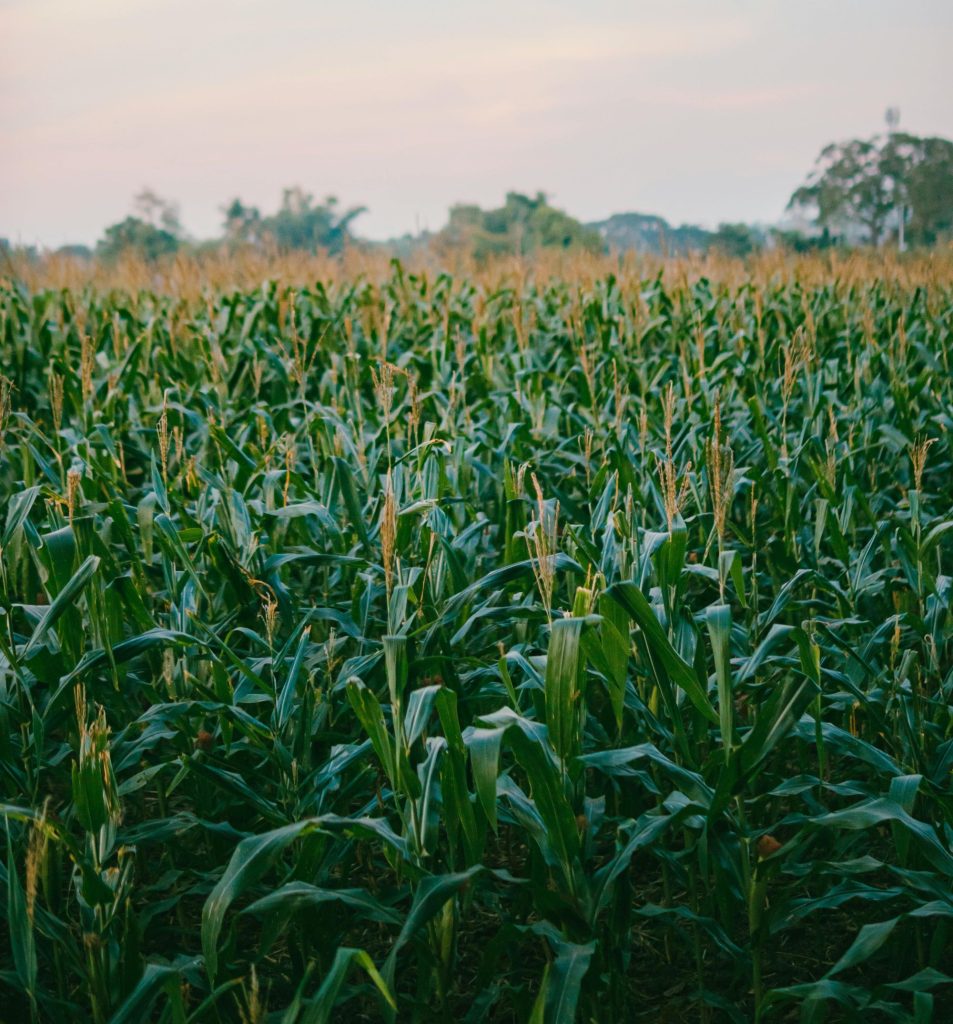
So back to biomass, stuff that’s grown for use either via direct combustion, or conversion into a biofuel, like biodiesel, “sustainable” aviation fuel (SAF), hydrotreated vegetable oil (HVO) which is used for home heating, made from cooking oil, aka used cooking oil (UCO). Aside from wood, dealt with in part 1, it could be a type of grass, soya, maize or various other crops. Whichever crop, or by whichever process, the essential feature is that this is something that has grown in the ground, and is then used as fuel, specifically as a substitute for, or alternative to, a fossil fuel.
Just as my electric car cannot tell the difference between electricity that comes from the solar panels on my roof, vs that from the grid, the atmosphere can’t distinguish between greenhouse gas from fossil fuels, and that from burning biomass. It’s the same stuff and it has the same damaging effects.
According to the WHO, there are around 700 million people in the world who “faced hunger” in 2023, and over two billion who suffer food insecurity. As the climate alters and patterns of rainfall and heat change, it is likely that some areas where food was relatively easy to grow will become far less hospitable. Some migrants are already motivated by changing weather patterns when their previously satisfactory land has ceased to be viable. Figures are hard to come by but, appallingly, the Zurich Insurance Group estimate that there could be 1.2bn climate refugees by 2050. So the likelihood is that in future, food security will be considerably worse than it is today, and we simply cannot afford to use good land for anything other than growing food.
So should we regard biomass as a renewable energy source? The biomass crops, sunflowers, maize or whatever, did of course draw down some carbon when growing. For the sake of argument, let’s say maize, which is simply burnt, just for the purpose of this illustration. If I grow a hectare of maize this year, say it will draw down a tonne of carbon dioxide as it grows. (I’ve not been able to find an exact figure as there are so many variables involved). If it is burnt next year, it will release that back into the air. The CO2 it drew down last year was part of the overall picture of that year, so you could say that by growing that maize, come the end of the year, all other things being equal, I have reduced the overall CO2 in the air by a tonne. That year is done and gone, let’s just “bank” the results for that year and focus on what we are doing now. If we burn the stuff, we release that CO2 back into the air.
To sum up, growing a hectare of maize last year was a good thing for the climate. It drew down some carbon and so reduced the warming of the planet by tiny fraction of a degree. Burning it and letting the carbon go again has undone that advantage, at a time when we desperately need to reduce emissions wherever possible. Much more on biofuels can be found at Biofuelwatch.
Finally, last month I mentioned the National Emergency Briefing held in London on 27 November 2025, and I’m returning to that as I think it may prove to be a pivotal event in the campaign on climate breakdown. To my knowledge, never before have we had such a comprehensive collection of climate commentators, mostly scientists, but others too, including a top doctor and a retired army general, sharing a platform to spell out the dangers. But it will be a positive tipping point only if we make it so. The letter to the PM and media heads was the immediate follow up to the event. A video documentary is being prepared by the NEB team for release in the spring. That will be a great opportunity to spread the NEB message more widely.
**************************************************************
Sources used for this article include:
nebriefing.org
Biofuel Watch
Our World In Data
Health Organisation, WHO
Zürich Insurance Group


