
By Ann Higgins
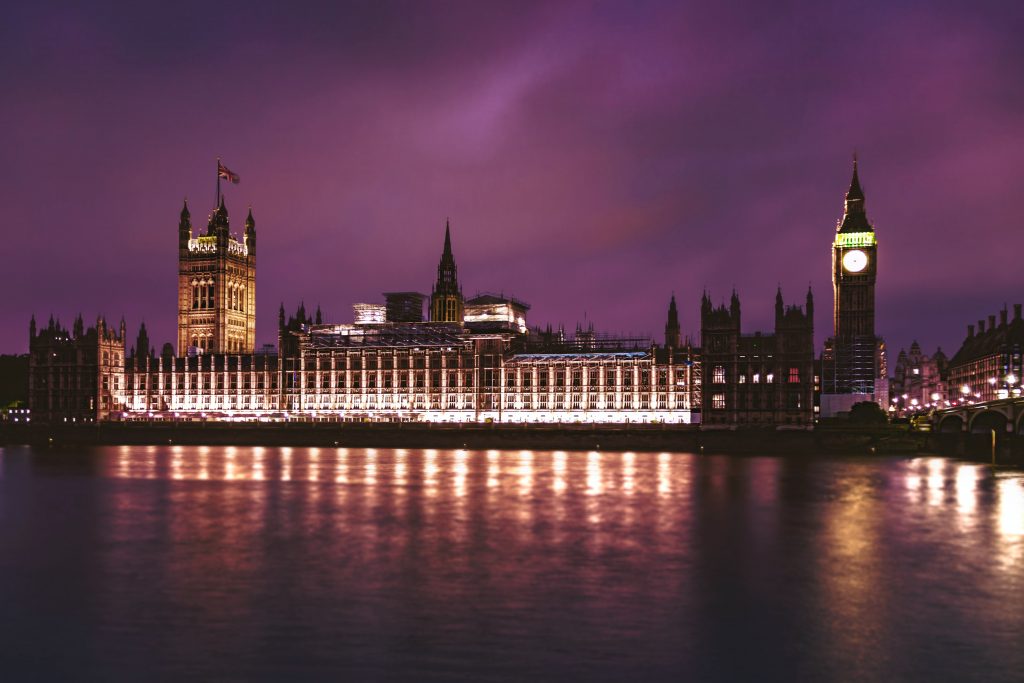
Photo by Deniz Fuchidzhiev on Unsplash
I fear that I’m beginning to sound like a broken record as I apologise yet again for mentioning the democratic crisis in the US but as someone once said, the US sneezes and the world catches cold. And while that was a reference to the impact of the 1929 Wall Street crash it’s equally applicable to our current political situation, in particular the risk that what we see in the US will spread to our side of the pond.
Though our legal systems are different in many ways, fundamentally they are the same – virtually everything we do from buying a bar of chocolate to getting married or suing our neighbour is underpinned by the principle that we are all equal before the law. That is to say that, whoever you are, the law, as exemplified by the statue of Lady Justice atop the Old Bailey, will treat you just the same. This is sadly not a principle which is valued or even acknowledged by President Trump, who under the spurious cover of the Alien Enemies Act 1798 (which can only be invoked in the case of a war having been declared by or against the country of the people you wish to deport) ordered the deportation of hundreds of alleged Venezuelan terrorists without due process. The deportations to a notorious goal in El Salvador proceeded despite the order of a federal judge that they should stop. The view being put forward by Trump et al is that anyone who interferes with his action supports criminals, but, without due process, no-one is safe from the actions of an authoritarian government, and that no judge is entitled to stop him exercising his presidential powers. “L’Etat c’est moi” as Louis IVX may have said.
How is that relevant to our situation here? Could it happen in the UK if a government with a large majority went rogue? Fortunately, we’re protected by Article 6 of the ECHR which reads “In the determination of his civil rights and obligations or of any criminal charge against him, everyone is entitled to a fair and public hearing within a reasonable time by an independent and impartial tribunal established by law. Judgment shall be pronounced publicly but the press and public may be excluded from all or part of the trial in the interests of morals, public order or national security in a democratic society, where the interests of juveniles or the protection of the private life of the parties so require, or to the extent strictly necessary in the opinion of the court in special circumstances where publicity would prejudice the interests of justice,” and by the fact that our courts are not politically appointed or elected as they are in the US, as well as the highest court for ECHR cases being super-national and therefore not able to be swayed in the same way as a national court.
However, it’s hard to escape the conclusion that a system which places so much power in the hands of one party or person is asking for trouble. Is it time to look at a move to some form of PR so that no one party can take control and railroad everyone else? I appreciate that many people will have a fear of Reform but surely better to have them as a small party within a Parliament elected by PR than run the risk of them gaining a big enough majority to attempt what Trump is doing? And while had the votes cast remained the same the LibDems would not have gained as many seats as Reform, there is every chance that faced with the reality for the first time that every vote counts, voters might well vote in greater numbers than under FPTP for both LibDems and Greens.
Is this the time to start making a really big noise about PR?


