
By Ann Higgiins
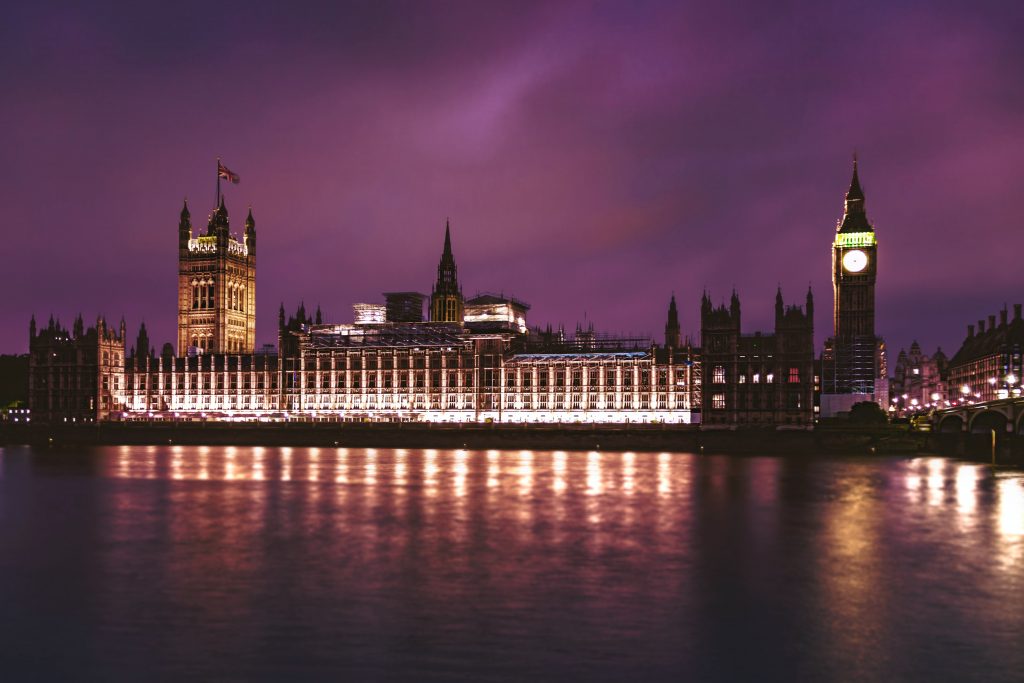
Have you come out from behind the sofa yet? Did you, like me, wake up on the morning of 6 November with a growing sense of dread? Are you still hoping against hope that the only event which makes 5 November memorable remains the Gunpower Plot? Sadly, that doesn’t look as if it’s going to be the case, so with little happening on this side of the pond save the small matter of Kemi Badenoch’s election as the 3rd Tory leader in little more than two years I thought that this month we might look at the recent events in the US. In particular, I should like to look at our respective constitutions (yes, we do have one) and draw some comparisons between the written constitution of the US and our unwritten one (or, perhaps more accurately, uncodified one) and how they enable us to deal with threats to our respective democracies.
Many is the time that we have been told that countries with written constitutions are more robust and capable of withstanding attacks than uncodified systems such as ours, the US constitution often being held up as a shining example. But just as Orban was able to take over in Hungary despite its written constitution and Erdogan similarly in Turkey, the US may also be unable to withstand a concerted attempt to render its constitution useless and, by the looks of it, we may be able to observe this in real time.
Step one is the legal seizing of power. To combat this the US constitution provides for the separation of powers between the legislature (i.e. Congress, which is divided into the Senate and the House of Representatives), the Executive (i.e. the President) and the judiciary (the Supreme Court of the United States or SCOTUS and the many courts, state and federal which are subordinate to it). Anyone wishing to take control of the country would ideally control all three parts (the “trifecta”) and, by coincidence, President Elect Trump is in the highly favourable position of controlling the Supreme Court due to a Republican Senate confirming his conservative picks for the SCOTUS last time round. So that leaves the legislature, which is divided into the House of Representatives (HoR) with seats being distributed according to population of each state, and the Senate, with each state having two senators. In the recent elections, in which many posts are decided, from the presidency down to the local dog catcher in some places, the Republicans will hold 53 seats and the Democrats 45 seats in the Senate, and probably (amazingly, they are still counting in Alaska) in the HoR 222 and 213 respectively, with 218 needed to take control. So, barring accidents, Trump will indeed hold the trifecta.
What will this enable him to do? The first thing is that he should have little trouble getting most of his picks for his Cabinet approved by the Senate, whether by the quick route of the Senate declaring a recess and them being approved without any further investigation, or by the longer and more cumbersome route of confirmation hearings. Anyone who has seen the list of those he wishes to appoint will have no doubt about his intentions to carry all that he said he would do before the election, from gutting the federal government and the military of anyone who might oppose him, to trying to deport millions of undocumented migrants, many of whom work in jobs that white Americans won’t do and pay tax, for which they get no return. And in theory at least his majority in the HoR should enable him to push through legislation which the Senate will then approve. However, three of his Cabinet picks are in the HoR so, if they are confirmed, this will reduce his majority pending special elections. Given that one of the most searched for things on Google the day after the election was “how do I change my vote?” they may not go in his favour.
All of that would be perfectly legal and within the constitution, and in the event of a dispute there is little doubt that the SCOTUS would rule in his favour as it did in the case concerning his immunity from prosecution. Along with his power to pardon people for federal offences, and the complete immunity handed him in that case for any acts concerning the Department of Justice, it is very hard to see how anything can stop him.
How does that measure up against our experience of our “unwritten constitution”? Perhaps the least constitutional act that any PM has tried to carry out during the last few years was Boris Johnson’s attempt to prorogue Parliament to prevent legislation by which Brexit might be stopped – which the Supreme Court had no difficulty in deciding unanimously was illegal. (Miller 2.) That had been preceded of course by Miller 1 in which the Supreme Court, differently constituted, held that the PM (then Theresa May) could not use prerogative powers to trigger Article 50 of the Lisbon Treaty, because under the European Communities Act 1972 which took us into the then European Economic Community, UK citizens were given rights by Parliament. Therefore, said the judges, only a vote of Parliament could remove them. In neither case did the judges abide by what may reasonably be thought to have been the wishes of the government. More recently our Supreme Court also refused to sanction the Rwanda Bill, thus emphasising its independence from the government for which that was a flagship piece of legislation; of course the government was eventually successful in getting the Bill through Parliament but not without difficulty. And it is, after all, the bulwark of our constitution that Parliament is sovereign – i.e. that it has the final say.
So how are UK Supreme Court justices selected? Not by politicians but by an independent selection committee as required by the Constitutional Reform Act 2005. It would be wrong to suggest that there is no political involvement in these appointments – the Lord Chancellor, a cabinet minister, chairs the committee, but they have no overriding vote nor power of veto. Thus our ad hoc system has so far proved more robust than the US constitution at preventing an overweening executive from trying to circumvent Parliament, which is the bedrock of our system. Whether that will remain the position with our new government – which has a far larger majority than any government for the last 20 years – remains to be seen.


