
By Chris Davey
For a few years in the late 1990s, I made regular trips to Yorkshire. My route took me through the town of Selby and past the nearby large power station. At the time, my thoughts were pretty much focused on remembering the route (no satnav back then), but also now and again thinking “hmm, that’s a big power station.” Years later, I realised that it was the Drax power station.
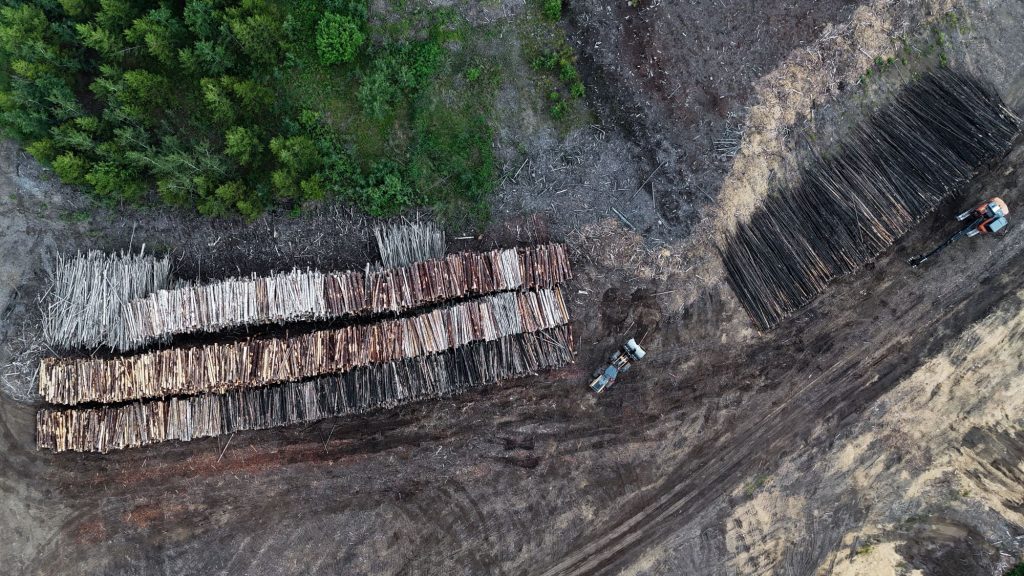
Thankfully, coal is no longer burnt in UK to provide electricity for the grid; sadly it still is in other countries and only recently slipped to being the second most used energy source for electricity generation – renewables now being number one. At the time I was marvelling at the size of this power station, it was burning coal. By 2021 it had been converted to burning wood chips, a form of biomass, so all good because that is a renewable source of energy, isn’t it? I think the fairest thing to say is that opinions differ on that point, largely because of the timescale of forest regrowth. So cut down trees now, burn them, and wait for regrowth… and wait, and wait; and while we are waiting, ponder that we now know that mature forests sequester more carbon than new plantations, so we have lost that benefit by giving those trees the chop. Also the CO2 emitted by Drax is higher now than when it was burning coal. Now there’s no way I want to go back to the days of burning coal, the dirtiest fossil fuel (except lignite, which is “brown coal”); but wood emits more CO2 than coal per unit of energy produced. Swapping fossil fuel for biomass is a questionable move. There might be some justification for burning stuff that can’t be used any other way, like unusable bits of timber, offcuts, etc. You don’t want those going into landfill and decaying anaerobically, emitting methane. But is it only waste material that is being burnt? Check the Guardian story linked below.
However, I can understand the urge to change to almost anything in order to reduce consumption of fossil fuels. According to earth.org, in 2023 the proportion the planet’s total energy mix (all energy requirements, not just electricity) that came from fossil fuels was 82%. That’s right, even with all the renewables we have, the reliance on fossil fuels was still over 80%. To me that indicates that there is truth in the Jevons paradox or rebound effect – yes, we have massively increased renewables, but still fossil fuels dominate our energy supply, so renewables seem to be just feeding our thirst for more and more energy.
On a domestic level, the appeal to burn wood can be enormous; perhaps there is some sort of evolutionary memory of the comfort of sitting by a blazing fire, providing warmth when you have only a cave or tent to live in, and the flames probably deterring hungry predators from eyeing you up as dinner. We continue to fall for this illusion; confession time – I had a wood burner installed in my previous home and hungrily stored up air-dried or kiln-dried logs to make my home warm and welcoming for the coming winter. For a while I fell for the myth that burning logs was zero carbon; after all, the carbon released by burning was just what the trees had drawn down from the air, and would be equivalent to that which would have been released into the air if the wood had been just left to rot on the forest floor, wouldn’t it? Well no, not really… aside from the emissions associated with felling, chopping and transporting the logs, releasing the carbon gradually would be preferable to letting it go in one blast, and importantly, wood left to rot would in fact decompose with the help of various organisms and so contribute to the overall biodiversity of the woodland. And more diverse land sequesters more carbon. Climate and biodiversity are inextricably linked.
Now let’s get to combustion products. Microparticles from wood burners have been compared with those from diesel engines, and in fact a report a few years ago said that stoves had overtaken diesel vehicles as the main source of this pollution in London. The site Mums for Lungs goes into quite some detail on the dangers of these tiny particles. But it’s worse than that; air quality inside the building is also adversely affected. Having given up cigarettes in 1979, I was a bit miffed to find out that I was inhaling airborne muck from the stove.
This piece, with the heading “biomass”, focuses on wood; but of course wood is not the only form of biomass — there are dedicated energy crops, such as maize, farm waste and other examples. So there is more to say, which I hope to explore in a future piece. Meanwhile my view is that the only thing that should be burning is our enthusiasm for getting real reduction in emissions of greenhouse gases.
****************************************************
Sources used for this article include:
Mums for Lungs
Biofuel Watch
Our World in Data


Thanks, Chris. It was good to read your reply. I also contact my MP and would encourage others to do so as well, although mine is Andrew George and he is already on side and very supportive of anything helpful to the climate/biodiversity crisis. I haven’t contacted any ministers yet (apart from the PM) but it’s a good idea, so thanks for the suggestion.
Many thanks for your kind comment Sarah. I do indeed try to make sure what I present as fact has evidence to back it, without making the piece read like an academic journal paper! If it’s just a notion I have, I try to remember to say ‘it could be that’ or ‘it seems to me’. Every fraction of a degree rise in temperature counts, and I agree that it’s important for each of us to do what we can. However I have not given up on trying to get policy change too, and have been making a nuisance of myself emailing our MP and indeed relevant ministers pointing out where (in my view) we need further action. Best wishes.
It’s good to read about the climate crisis in the newsletter. I think most of us are still not as knowledgeable as we might be and the articles seem very thoroughly researched. I want to be as informed as possible so I can make good decisions and help, even if only in a tiny way. I think many of us feel the time has passed when we can expect the government to step up to the extent it needs to and that we now have to do our own bit, however small.