
By Ann Higgins
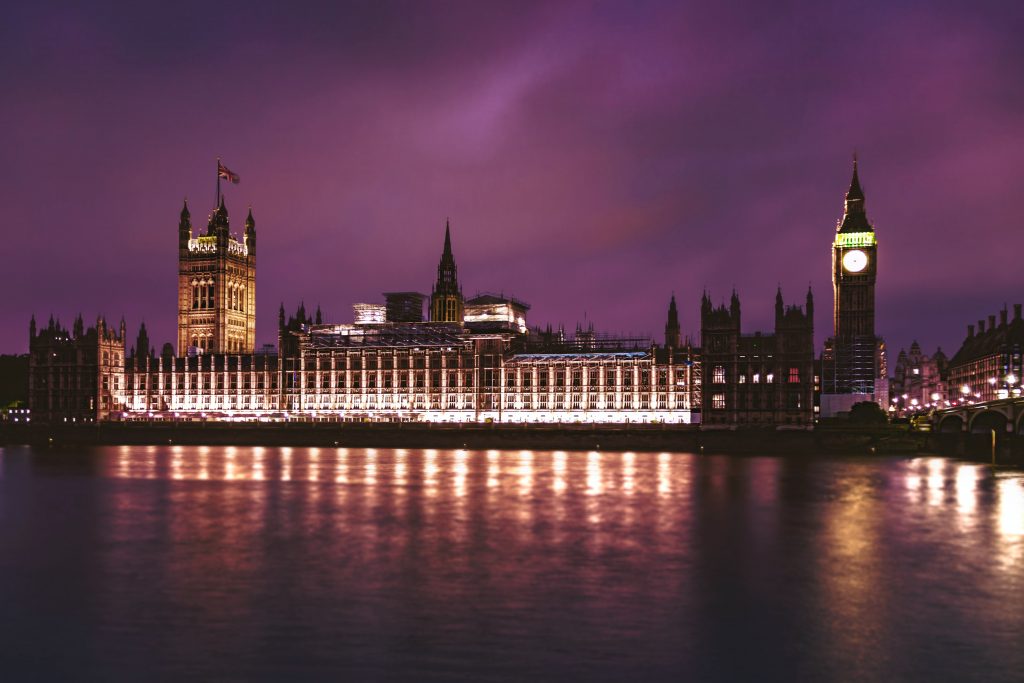
Photo by Deniz Fuchidzhiev on Unsplash
We’re taking a bit of a departure in this issue to look at the controversy over the proposal by some politicians, including the two remaining candidates for the Tory leadership, to take the UK out of the European Convention on Human Rights (ECHR). Of course, unlike many who argue in favour of it we know that it is not directly connected with the EU but nonetheless withdrawal would have profound consequences both for each of us individually, but also for our position in Europe as a whole.
Firstly, a bit of technical stuff. While people including politicians talk about withdrawing from the ECHR or sometimes from the European Court of Human Rights (ECtHR), what they really mean is that we would leave the Council of Europe (CoE), which was formed in 1949 and now comprises 46 European states including all 27 EU members. Virtually the first task of the newly formed body was to draft a treaty to protect the rights and fundamental freedoms of the people of Europe following the horrors of World War II, and this became the ECHR, which was launched in 1950, the UK being one of the first signatories. The only countries to leave the CoE have been Russia and Belarus following the invasion of Ukraine when their membership was suspended and then cancelled. No country has left voluntarily. So far.
It’s often argued that leaving the CoE would enable our government to reclaim control over immigration. This is despite the fact that, since we left the EU, the government has complete control over the vast majority of immigration by requiring non-UK citizens to acquire visas before they may enter the UK (except for tourism from certain countries). Contrary to what many on the right appear to believe, irregular immigration (e.g. by asylum seekers) comprises c.5% of total immigration and c.10% of net immigration, though this varies slightly from year to year.
How does the ECHR impact this control? The Human Rights Act 1998 incorporated the ECHR into UK law and requires the courts to give effect to other laws in a way which is compatible with Convention rights and makes decisions of the ECtHR directly binding upon our courts. Those Articles which are perhaps most used in our courts including immigration tribunals are the right to a fair trial (Article 6) and to privacy and family life (Article 8). More details here.
It’s the latter which most often enrages those who oppose this “foreign intervention” in our laws with what they see as egregious cases often making the headlines of the Daily Mail. Regrettably, reports in mainstream media are often unreliable as with the notorious oft-quoted case first mentioned by Theresa May, who claimed in a speech in 2011 that “We all know the stories… about the illegal immigrant who cannot be deported because, and – I am not making this up – he had a pet cat.” However, as the Guardian explained at the time the decision of the court was based on the Home Office’s concession that it had failed to apply its own policies pertaining to unmarried partners of people settled in the UK and had nothing to do with the couple’s cat.
What effect would leaving have? Its proponents’ arguments are somewhat contradictory – on the one hand, they claim that it would enable the UK courts to remove illegal immigrants without being constrained by the ECHR, but in the next breath they seek to reassure us that we wouldn’t lose any rights. Yet for that to be true certain classes of people, initially immigrants, would have to be outside any rights regime. Tory leader candidate Robert Jenrick has already vowed to kick one million immigrants out of the UK, which begs the question which immigrants he is talking about. Leaving aside the principle that all rights should be universal, personally I could not trust a government that wanted to remove rights from one group not to want then to remove them from others. Ironically, those presently shouting about there being a “two-tier legal system” are frequently those who are most in favour of our losing the protection that the ECHR gives us. If the rights of those who have recently been convicted of online incitement and hate crimes have been impinged, it will be the ECHR which will be used to acquit them and it is the Labour government which has pledged to retain it.


