
By Ann Higgins
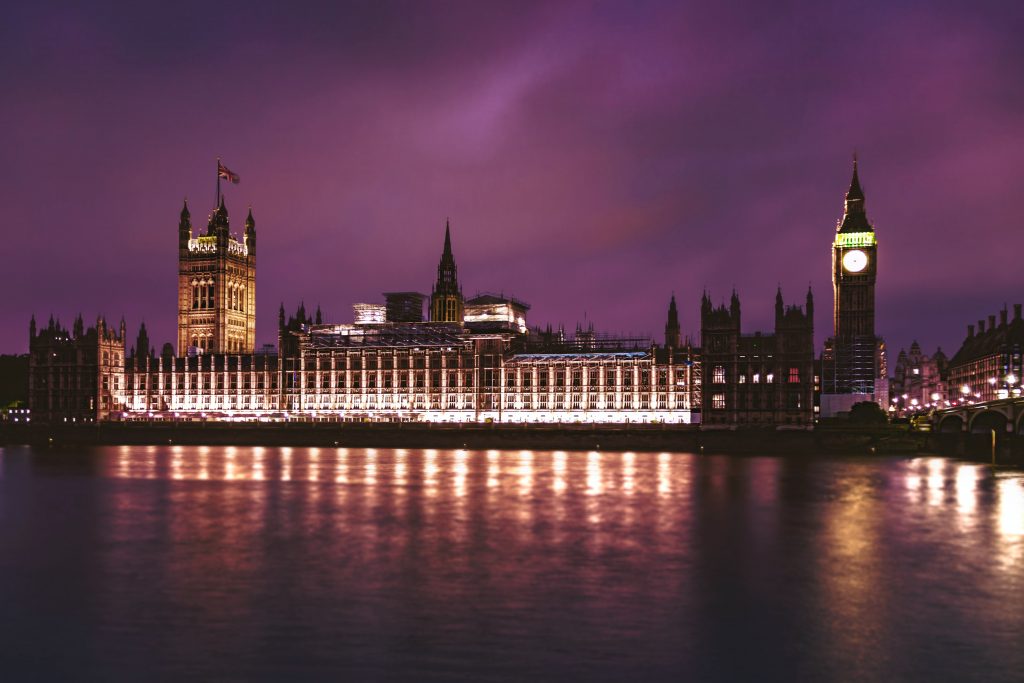
deniz-fuchidzhiev — unsplash
While we were sleeping, or: Home thoughts from abroad
Having spent considerable amounts of time over the last few days with a group of Americans, my thoughts have naturally turned to the subject of elections and how our concepts of democracy vary from place to place.
In the UK, a great deal of ire has been expressed by some on the right about the fact that in our recent elections Labour achieved a very large parliamentary majority of 174 seats despite securing only 33.7% of the votes cast. This is of course to ignore the fact that our uncodified constitution provides that the party which gets the most votes in the greatest number of constituencies is deemed to have won the election, subject to having won over 50% of the seats in the House of Commons, presently 325+1. This throws up some anomalies: Reform, with 4 million votes has just 5 MPs, whereas the LibDems with 3.5 million votes have 72. Both support changing our electoral system from FPTP to PR – politics sometimes makes strange bedfellows!
Meanwhile, in the US, their written constitution can also lead to what appear to be strange results, the most recent of which was the victory of Donald Trump in 2016, despite having received three million fewer votes than Hillary Clinton. The culprit in this case is the US constitution, which provides that the President and Vice President are not determined by the popular vote but by the votes of the Electoral College. Each state is entitled to contribute to the college a number of electors equal to its representation in Congress, i.e. two senators plus the number of its representatives.
This leads to some voters having more say in the outcome than others, as smaller states have an inbuilt advantage. For example, North Dakota with a population of 779,000 has three electoral college votes (1: 260,000) whereas California with a population of 40 million has 54 votes, i.e. 1: 740,000.
Many US voters understandably find this unfair and undemocratic and, as in the UK, there’s a movement to reform the voting system by reforming the Electoral College or abolishing it altogether. However, as the current system favours one party rather more than the other, states which favour the Republicans being, on the whole, less populous than those which traditionally lean Democrat, agreement seems unlikely.
Similarly, in the UK neither Tory nor Labour seems inclined to consider a move to PR seriously despite in the case of Labour there being a large majority of its members in favour of doing so. But it could be to Labour’s benefit if the next election result were closer, as argued here in a recent Guardian article by Peter Walker:
“It’s perfectly possible to imagine an outcome next time where the Labour vote drops relatively modestly, and the obvious electoral coalition is Labour plus some combination of the parties I’ve just named. And the number one bargaining chip would be electoral reform.”


